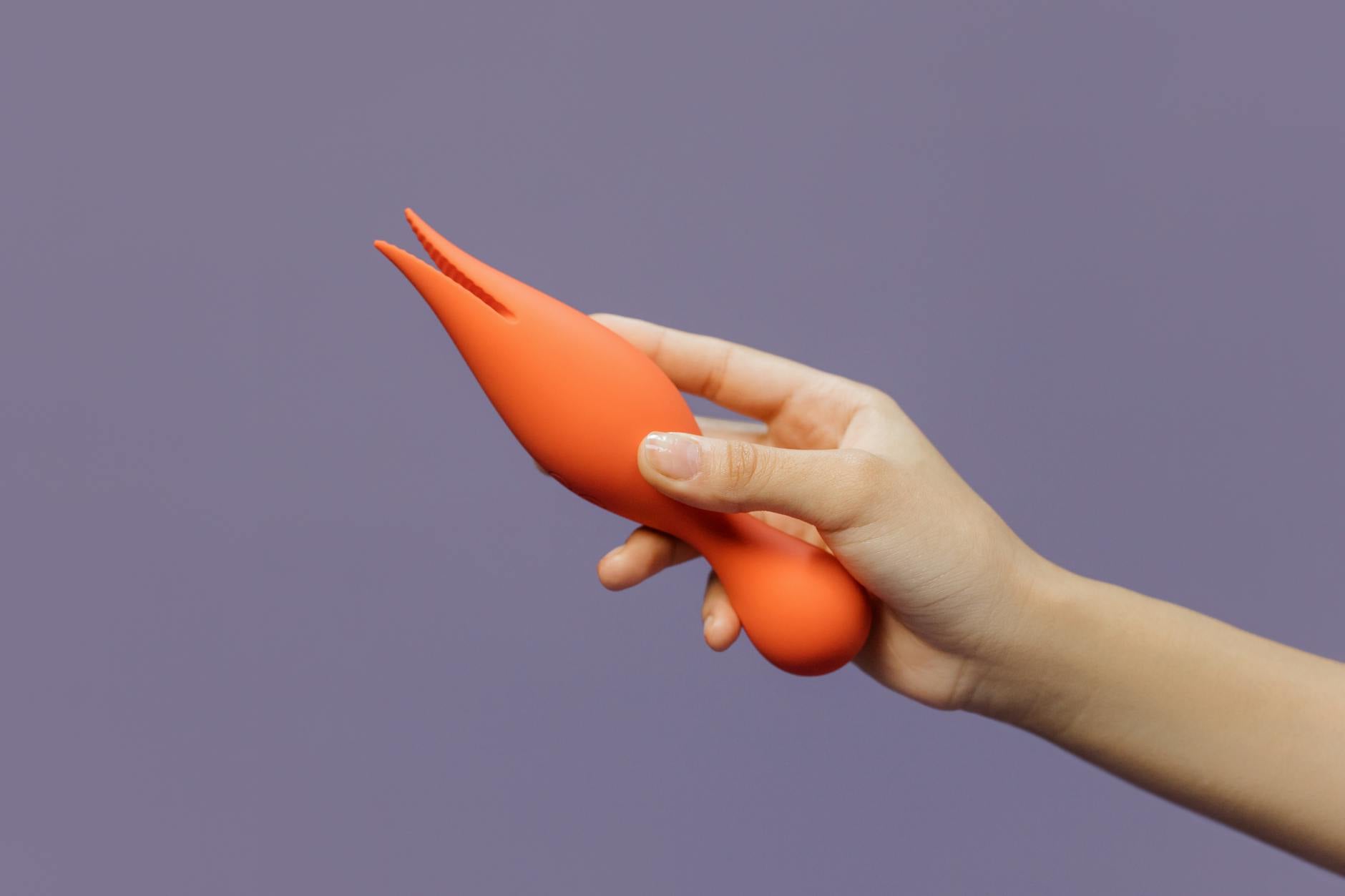
How to Control Lemon Vibrator Intensity for Subtle Orgasms and Sustained Pleasure
Let's be real. Most people who buy a lemon clitoral vibrator go straight to the highest setting and stay there. Understandable. It works. But you're leaving about 80% of the experience on the table.
Subtle intensity isn't a compromise. It's the opposite. When you learn to use your lemon vibrator at lower settings, you unlock longer sessions, quieter pleasure, deeper sensation, and orgasms that feel less like a sprint and more like a sustained climb. This is the conversation I wish someone had with me years ago.
Why high intensity feels urgent (but isn't better)
Your clitoris has about 8,000 nerve endings packed into a space the size of a pea. When you jump to maximum intensity on your lemon vibrator, those nerves fire all at once. It's loud, fast, and it gets the job done. But it also fatigues those nerves, which is why many people need higher settings to finish the job a second time.
At lower intensities, the nerve endings fire more selectively. You feel distinct sensations instead of an overwhelming buzz. Your brain registers more nuance. And because you're not hammering the same neural pathways, you stay sensitive throughout and beyond the session.
This is why how to find your perfect lemon vibrator intensity without going numb matters so much. The goal isn't maximum stimulation. It's optimal stimulation.
The three-setting framework for sustained pleasure
Most lemon sexual toys, including the Hello Nancy lemon vibrator, have 3-8 intensity levels. Here's how I recommend approaching them.
Setting 1-2 (Exploration Zone). This is where you spend the first 5-10 minutes. Your body is warming up, blood is flowing to your genitals, and your clitoris is becoming more responsive. At these gentle levels, you'll notice texture, pattern shifts, and subtle pressure changes that feel invisible at high intensity. Many people skip this entirely and miss it. Don't be those people.
Setting 3-4 (Plateau Zone). Once you feel genuine arousal (not just physical response, but mental engagement), move here. This is where most sessions should live. You'll feel distinct waves of sensation, can build momentum without rushing, and your body stays responsive for 20, 30, even 45 minutes without fatigue.
Setting 5+ (Peak Zone). Use this only in the final 2-3 minutes, when you're ready to finish. Or skip it entirely if the lower settings are already working. Higher settings aren't a goal. They're an option.
How to actually control intensity without overthinking it
Here's the practical part. You're using your lemon vibrator. You've started at setting 2. Now what?
The instinct is to crank it up immediately when you hit any plateau. Resist that. Instead, stay at your current setting for a full two minutes. Really two minutes. Feel the sensation change as your body acclimates and your arousal deepens. Often the plateau was just your nervous system adjusting, not a sign that you need more.
If after two minutes you genuinely want more, move up one level. Not two. One. Spend another two minutes there. You're building a map of your own pleasure, not rushing toward a finish line.
If you're using your lemon vibrator with a partner, this becomes even more interesting. They can watch your breathing, the micro-movements of your body, the shift in your expression. You don't need to say "more" or "harder." Just communicate about what feels different at each level. That conversation is itself intimate.
The quiet pleasure angle (why it matters more than you think)
One huge advantage of lower intensity settings on your lemon clitoral vibrator is noise. At setting 1-3, most people can barely hear the vibration. At setting 6-8, it sounds like an angry wasp in a box.
If you live in a shared space, have roommates, or value discretion, this changes everything. You can have a 20-minute session without anyone noticing. But beyond the practical logistics, there's something psychologically different about quiet pleasure. It feels more private, more interior, more yours. You're not performing for sound. You're just feeling.
Pattern variation and intensity — a secret most people miss
Lemon sexual toys often have multiple vibration patterns (pulsing, escalating, rolling waves) in addition to intensity levels. Most people treat these separately. Bad move.
A pattern at intensity 2 feels completely different than the same pattern at intensity 4. And a pattern you hated at intensity 6 might be your favorite at intensity 3. If you've dismissed certain patterns as "not for me," go back and try them at half the intensity.
This is where you discover personal preference at a deeper level. You're not just choosing "which pattern," you're discovering "which pattern at which intensity creates the exact sensation I want right now."
Building stamina without numbing out
One concern people have is that lower intensity means you need longer sessions to reach orgasm. True. It also means you're less likely to develop the kind of desensitization where only the highest settings work anymore.
Think of it like exercise. You can sprint for 30 seconds or build an aerobic base over 30 minutes. One is faster. The other builds capacity. If you want your lemon vibrator to feel good for years without escalating intensity, spend time at lower settings.
It's not laziness. It's strategic. How to recover clitoral sensitivity after long-term lemon vibrator use is a real issue. You can avoid it entirely by not chasing maximum intensity in the first place.
Solo vs. partnered intensity — the difference
When you're using your lemon vibrator alone, you control everything. You can stay at setting 2 for 45 minutes if that's what feels good. With a partner, there's often pressure (internal or external) to "finish" or progress faster.
One thing I recommend: have a conversation beforehand about intensity. Tell your partner that you want to explore lower settings, and that this isn't about slowness or hesitation. It's about depth. If they're worried they're doing it wrong, they're not. You're doing exactly what you want.
Also, lower intensity during partnered play often means more freedom for you to move, engage, or make noise. You're not locked into one position trying not to escape the vibration. There's more flexibility, more playfulness.
The mental game — why restraint is actually more fun
Lower intensity requires more attention. You have to tune in, stay present, notice small changes. It's harder to zone out and easier to get lost in sensation.
This sounds like a disadvantage. It's not. Presence is where pleasure lives. If you're just waiting for an orgasm while your mind drifts, you're missing the session entirely. Lower intensity demands your brain show up, which makes the whole experience richer.
What to do if lower intensity isn't working for you
Some people have always needed higher stimulation. That's fine. Your body isn't broken or abnormal. But before you assume high intensity is your only option, try this: start a session with zero expectation of orgasm. Just exploration. Spend 15 minutes with your lemon vibrator at settings 2-3. Don't try to finish. Just feel.
Often, when you remove the goal and the time pressure, lower intensities suddenly become more interesting. Your nervous system relaxes, your clitoris becomes more responsive, and you find sensation you missed when you were rushing.
If that still doesn't work, no problem. Use what works. But you'll have actually tried, not just assumed.
The long game with your lemon clitoral vibrator
You probably plan to use your lemon vibrator for years. Maybe decades. Treating it like a maximum-intensity sprint guarantees you'll need higher settings 12 months from now, and even higher ones a year after that. It's a treadmill you built yourself.
Lower intensity is a choice to keep pleasure interesting and responsive over time. You're not settling. You're building. And the sessions you have at setting 3, with patience and attention, often feel better than any rushed peak-setting finish ever will.
Start your next session at level 2. Stay there for 10 minutes. Then decide what comes next. You might be surprised.
People also ask
Can you damage your lemon vibrator by using it on low intensity all the time?
No. Lower intensities actually put less mechanical stress on the motor and battery. Using your lemon sexual toy at gentler settings will often extend its lifespan. The only way intensity settings damage a vibrator is if you're forcing the device to vibrate at intensities it wasn't designed for. Hello Nancy products are engineered to perform consistently across all advertised settings.
Does lower intensity on a lemon clitoral vibrator take significantly longer to reach orgasm?
Usually 5-10 minutes longer, depending on your baseline. But most people find that the orgasm itself feels fuller when they've built to it gradually. It's not that lower intensity is slower. It's that you're not rushing. And many people report that they can have multiple orgasms when they start at lower intensities, whereas high-intensity sessions often leave them too sensitive for a second round right away.
Is it normal to prefer lower settings than a partner?
Completely normal. Clitoral sensitivity varies wildly between people. What feels perfect for one person is overstimulation for another. If you prefer lower intensities and your partner prefers higher ones, that's not a mismatch. That's just information. You can take turns, use the lemon vibrator together in ways that work for both of you, or simply accept that intensity preference is personal, not a referendum on compatibility.
Can you use a lower intensity lemon vibrator on high-sensitivity days?
Absolutely. Some days your clitoris is more reactive, and what felt good yesterday feels intense today. That's why intensity controls exist. Lower settings let you adapt to how your body actually feels on a given day rather than forcing yourself to tolerate a preset that no longer fits. This is especially true if you're using how to use a lemon vibrator with your partner for the first time, when communication and flexibility matter most.
What's the difference between gradually increasing intensity and staying at one level?
Gradually increasing intensity (2-3-4-5) across a session creates momentum and keeps sensation novel. Staying at one level (say, setting 3 for the whole time) deepens your relationship with that specific sensation and often produces a different quality of orgasm. One isn't better. They're just different experiences. Many people alternate: some sessions they build gradually, others they pick a level and stay there.
If I usually need high intensity to finish, should I force myself to use lower settings?
Not force yourself, but experiment. Start with high intensity for one week as normal. Then the next week, try starting at lower intensity and only moving up if you genuinely want it, not out of habit. You might find that your body adapts within days and discovers responsive sensations at lower settings. You might also discover that you actually do prefer high intensity and that's legitimate. The point is knowing the difference between preference and habit.
If you're uncertain about your ideal intensity or want personalized guidance on using your lemon clitoral vibrator, reach out to Hello Nancy. We're here to help you find what actually works for your body, not what conventional wisdom says should work.