
Let's start here: solo and partnered pleasure are genuinely different experiences
Using a lemon vibrator alone feels one way. Using one with a partner feels another. Not worse, not better. Just different. And honestly, most people don't talk about the gap because we're taught to pretend the experience is universal, which sets couples up for confusion and disappointment.
Here's what I hear from people who've used a lemon vibrator solo and then introduced one with a partner: "It felt strange at first." "I was more aware of them watching." "The pressure felt different somehow." "I couldn't relax into it the same way." Those observations are real, valid, and worth understanding.
The physical sensations actually shift
When you're alone, your body can relax into a kind of single-pointed focus. You know your rhythm, your pressure, your exact angle. You can shift the lemon vibrator micro-millimeters to find the perfect spot, hold it there for exactly as long as you need, and let arousal build in your own time.
When someone else is involved, something neurologically different happens. Your attention splits. You're feeling the vibrations of the lemon clitoral vibrator AND noticing their breathing AND managing the vulnerability of being watched AND tracking their pleasure response. Your nervous system is doing more work, which means arousal takes a different shape entirely.
That split attention can feel like a loss of control, especially if you're used to solo play where you're completely in charge. But it can also feel like an expansion. Many people report that the presence of a partner actually intensifies sensation because the emotional stakes feel higher.
Timing becomes a negotiation
Solo, you control tempo. You speed up when you want, slow down when you want, stop if something stops feeling good and restart whenever. It's a conversation between you and your own body.
With a partner, even if they're just holding the lemon vibrator for you, there's an implicit conversation happening. They can't know your internal cues unless you tell them. They might apply more or less pressure than you'd apply to yourself. They might keep going when you need a break, or back off when you're about to come.
That's not bad. It's just different. And it requires talking. A lot more talking than you probably expect.
The vulnerability piece is the actual shift
I've worked with couples where one partner was comfortable with lemon vibrators during solo play but anxious about using one with their partner. The anxiety is almost never about the vibrator itself. It's about being seen in that state of need.
When you're alone, you can be as vocally responsive, facial-expression-y, and uninhibited as you want. The vulnerability is just you and you. With someone else present, especially if this is new for your relationship, many people tense up. You might be worried about looking a certain way, sounding a certain way, or taking too long to orgasm.
That tension literally changes sensation. Your pelvic floor tightens, your breathing gets shallower, your nervous system edges toward fight-or-flight instead of rest-and-digest. No lemon vibrator, no matter how good, works well against that backdrop.
Why the pleasure gap feels real (and how to close it)
So when someone says "It felt different with my partner," they're usually reporting some combination of: less internal focus, a split nervous system, timing misalignment, and protective tension. All of those are solvable, but they require awareness and communication.
Here's what actually helps. First, go in with lowered expectations the first time. You're not trying to replicate the solo experience. You're creating a new one. The goal is not "perfect orgasm" but "I can relax enough to feel good." That reframe takes so much pressure off.
Second, talk before. Tell your partner what feels good to you when you're alone. Show them, if you're comfortable. Use words like "I like steady pressure on the left side" or "I need to start slow and build." Don't assume they'll intuitively know your rhythm. They won't, and that's not a failure on their part.
Third, use the lemon vibrator as a tool for exploration, not a measure of your connection. If you come with them present, that's great. If you don't, that doesn't mean anything is wrong. Many people find it takes three, five, even ten times before their nervous system fully relaxes into partner play with a vibrator.
When one partner wants it and the other is hesitant
This deserves its own conversation. If you've been using a lemon vibrator solo and want to introduce one with your partner, and they seem uncertain, pause. Hesitation isn't rejection. It might be vulnerability. It might be self-consciousness. It might be that they worry the vibrator means you're not satisfied with them.
None of those are true, and none of them are solved by pushing. What helps is naming the hesitation directly. "I've noticed you seemed uncertain. I want you to know that using a vibrator makes me feel good, and I'd love to share that with you, but only if you're genuinely interested. What's coming up for you?"
Sometimes the hesitation dissolves with conversation. Sometimes your partner needs to see how you use it solo first. Sometimes they need to be in control of the vibrator so they don't feel like an bystander. Everyone gets to partnered vibrator use via a different door.
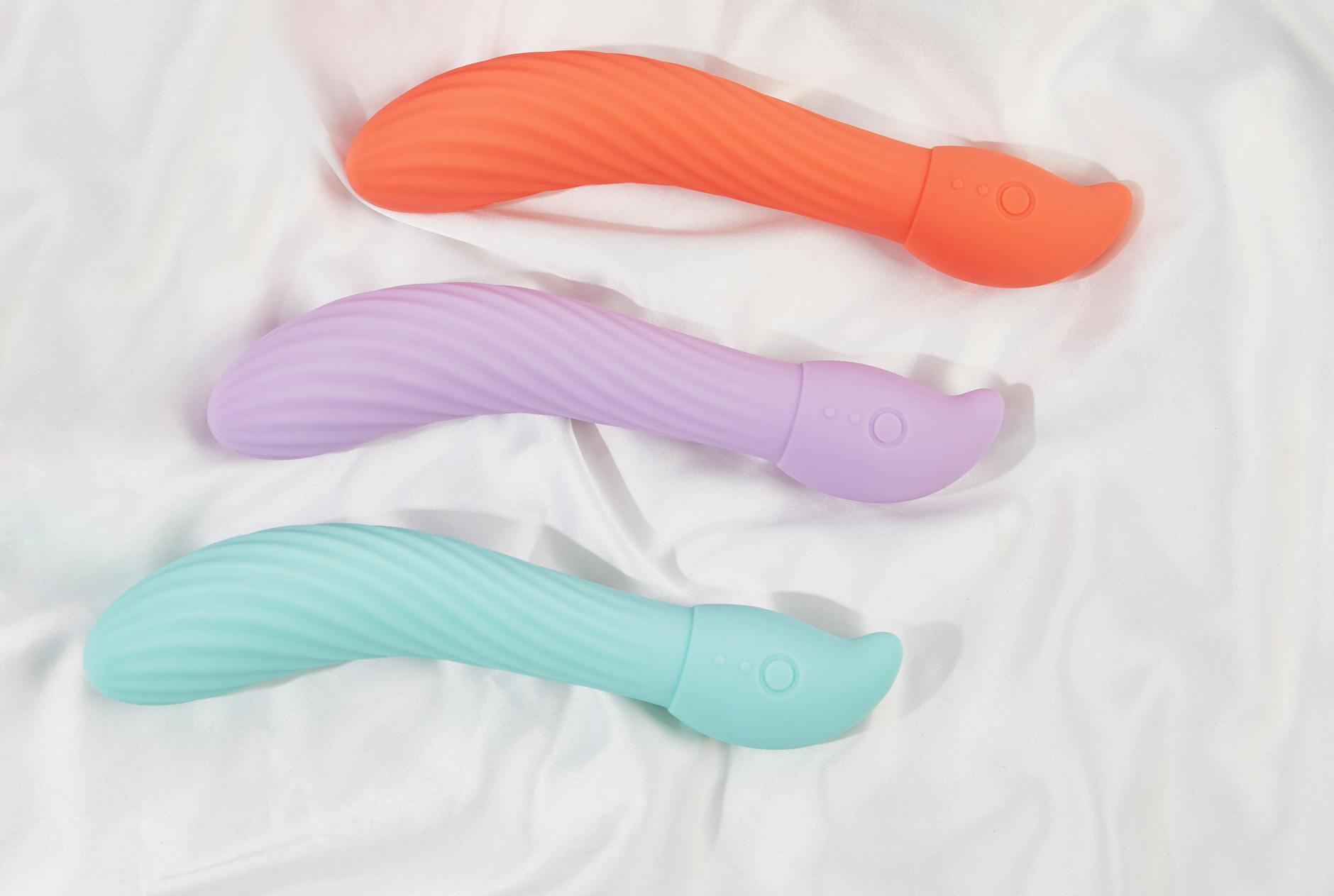
Photo by IFONNX Toys on Pexels
The role of emotional safety
This is the piece that separates the people who enjoy partnered vibrator play from those who don't. It's not about the vibrator itself. It's about feeling safe enough to be that vulnerable with another person.
Emotional safety means your partner has shown you, over time, that they're interested in your pleasure for its own sake. Not as a performance. Not as something to brag about. Not as a means to their own satisfaction. As something that matters because it matters to you.
If you're in a relationship where that foundation exists, partnered vibrator play usually unfolds naturally. If it doesn't exist, no vibrator will fix that. A lemon vibrator is not a relationship repair tool. It's a pleasure tool, and it works best in relationships where pleasure is already valued.
The rhythm of integration
Most couples find that after the first awkward time or two, using lemon vibrators together becomes no big deal. It moves from a special occasion event to one tool among many. You stop overthinking it. Your body stops bracing for vulnerability. The sensations settle into a new normal.
Some couples find that partnered vibrator play becomes their favorite way to have sex. Others use it sometimes. Others keep it solo. None of those are wrong. The point is having the conversation and the permission to explore without judgment.
Practical things that actually help the first time
Start with lower vibration intensity than you'd use solo. You're not trying to prove anything or rush to orgasm. You're building comfort.
Keep the lights on if you can. Darkness can feel more vulnerable than it needs to be. Soft light feels steadier.
Use more lube than you think you need. Nerves make bodies drier. Lube is not a sign of failure. It's a sign of respect for your nervous system.
Give yourself permission for awkwardness. The first time is often weird. That's normal. Weird doesn't mean bad.
If it doesn't work the first time, try again. And again. Most people need multiple attempts before their body fully cooperates.
The long-term benefit
When couples successfully integrate vibrators like the Lem into their shared pleasure, something shifts. There's less pressure on penetration. There's more focus on actual sensation and what feels good rather than what's supposed to happen. There's more conversation about desire. There's less performance and more presence.
That's not just about vibrators. That's about couples learning to talk about pleasure without shame, which changes everything.
People also ask
Why does using a lemon vibrator feel so different with a partner than alone?
Your nervous system behaves differently when someone else is present. Solo, you can focus entirely on your own sensation. With a partner, you're monitoring their response, managing vulnerability, and splitting your attention. Additionally, you lose direct control over tempo and pressure, which changes the physical sensation itself. This doesn't make it worse—just neurologically distinct. Most people's bodies adapt after a few experiences.
How do I tell my partner I want to use lemon vibrators together?
Start with honesty rather than performance. You might say something like: "I've been using a vibrator on my own and it feels really good. I'd love to explore that together with you, if you're interested. I know it might feel new, but I want to share this." Give them space to ask questions. If they seem hesitant, ask what's coming up for them instead of pushing. Hesitation is usually about vulnerability, not rejection of you.
Can using a lemon clitoral vibrator with a partner make us closer?
It can, but only if the foundation is already there. Vibrators don't fix disconnection or resentment. They work best in relationships where both partners genuinely care about each other's pleasure. If emotional safety and communication are strong, exploring vibrators together often deepens intimacy because it requires vulnerability and creates a conversation about desire that many couples don't otherwise have.
What if I can't orgasm when my partner is using a lemon vibrator on me?
That's extremely common the first time, and even several times. Your nervous system may be in fight-or-flight rather than rest-and-digest mode because of vulnerability, performance pressure, or distraction. Lower the stakes: you're not trying to come, you're just trying to feel good and build comfort. Many people need five to ten experiences before their body relaxes enough to climax. Sometimes the goal is simply presence and pleasure, not orgasm.
Is it normal to feel self-conscious when my partner sees me use a lemon vibrator?
Completely normal. Many people feel exposed or like they're being judged. That self-consciousness often decreases with repeated positive experiences where your partner has clearly communicated interest in your pleasure. If the self-consciousness persists, check in about your emotional safety in the relationship. You should feel fundamentally okay being seen wanting something.
How long does it usually take to get comfortable with partnered vibrator play?
It varies widely. Some couples click with it immediately. Others need three to five attempts before the nervousness settles. Some take months of occasionally trying before their body fully cooperates. There's no timeline you "should" be on. What matters is gentle, repeated exposure and consistent communication with your partner about what's working and what isn't.
The bigger picture
Let's be real: if you've been using lemon vibrators solo and want to bring that into partnered play, you're already ahead of most couples. You know your body. You know what feels good. You've given yourself permission to prioritize pleasure. Now you're choosing to make that visible and vulnerable with another person. That takes courage.
The gap between solo and partnered vibrator play closes when both partners show up with curiosity instead of pressure, and when you agree that exploring your pleasure together is a feature of your relationship, not a bug.
Start here: have the conversation before the vibrator is even in the room. Tell your partner what you've discovered about yourself. Listen to what comes up for them. Then try, and try again, with patience. Most couples find that after the initial awkwardness, partnered play with lemon vibrators becomes one of the simplest, most pleasurable things they do together.
If you're feeling stuck or like communication is breaking down, consider reaching out to a relationship specialist. Sometimes an outside voice helps couples get unstuck around intimacy in ways that aren't accessible on your own.
Your pleasure matters. Your partner's comfort with that matters too. Both are possible at the same time.