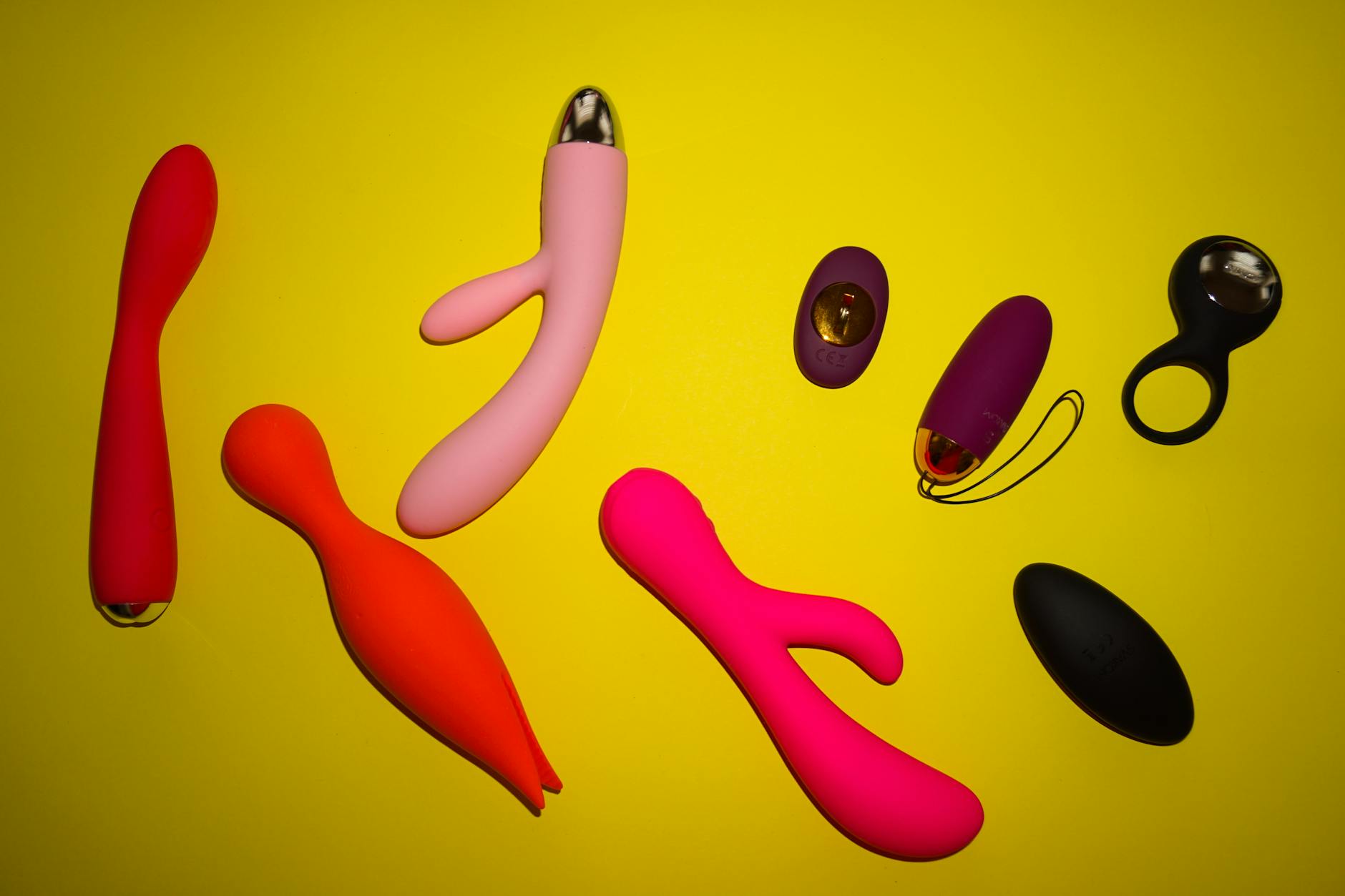
What actually happens to desire as you age together
Let's be real. At 45, 55, 65, sex with a long-term partner is different than it was at 25. And not always in bad ways. But different can feel like a threat if you're not naming what's actually shifting. Arousal takes longer. Recovery takes longer. Interest fluctuates. Bodies change. And suddenly you're both wondering if you're broken, or boring, or if the relationship is cooling when really you're just aging.
Here's what I've learned sitting across from hundreds of couples navigating this exact transition. The couples who stay connected sexually aren't the ones pretending nothing changed. They're the ones who build new rituals around what their bodies actually need now.
Why physical response changes with age
It's not psychological. It's not about your relationship. It's biology.
As we age, blood flow to genital tissue decreases. Arousal response slows down. Orgasm intensity may shift. In people with vulvas, estrogen and testosterone both decline, affecting tissue thickness and lubrication. In people with penises, erectile response becomes less automatic and recovery time extends. This isn't failure. It's just what happens when your nervous system and cardiovascular system age.
But here's what doesn't change. Sexual desire often persists. The capacity for pleasure remains intact. And the ability to feel connected and turned on by your partner is still very much possible. The problem isn't your body. The problem is usually mismatch. You're both expecting arousal to work the way it did at 30, and when it doesn't, you interpret it as rejection or cooling instead of seeing it as a signal to adapt.
Why lemon vibrators shift the dynamic for aging couples
A lemon clitoral vibrator works differently than traditional vibration or manual stimulation. The suction mechanism mimics indirect pressure and gentle pulling sensations that don't rely on the rapid-response arousal patterns of youth. This matters for aging bodies because suction-based clitoral vibrators can trigger pleasure even when traditional arousal pathways are slower to activate.
What I hear from couples using lemon vibrators in their 50s, 60s, and beyond is consistent. It removes the pressure. When one partner feels their arousal shifting, introducing a lemon adult toy reframes the conversation from "what's wrong with me" to "what can we explore together." It also means the partner who experiences slower arousal isn't left feeling like they're holding up the experience. You're building pleasure together with a tool that works with your actual bodies, not against them.
Second, suction-based toys often feel more intense and more controllable than traditional vibration. This appeals to aging bodies because you can start slow, build gradually, and adjust without losing sensation. Many of my clients report that their most reliable orgasms in midlife and beyond come from tools that offer this kind of response.
Rebuilding ritual and anticipation
One of the most overlooked shifts in aging partnerships is anticipation. When you're young, sex is often spontaneous. Your bodies are ready to go. At 50, anticipation becomes your superpower. Building it is how you give your nervous system time to catch up.
Introduce the lemon vibrator not as a solution to a problem, but as an invitation. "I found this tool. I'm curious about it. Would you be interested in exploring it together?" This reframes it from fix to exploration. Anticipation builds in the days before you actually use it. You're both thinking about it. Curiosity primes arousal better than any physical touch can.
When you do use it, slow down. Spend 10-15 minutes on arousal before introducing the toy. Let your bodies warm up naturally. The goal isn't to rush to orgasm. The goal is to practice having pleasure together in this new configuration. Some of the most satisfying experiences my couples describe aren't the fastest to climax. They're the ones where both partners felt present the whole time.

Communication patterns that actually work
Introducing a toy into a long-term partnership requires a specific kind of conversation, and most couples get it wrong. They either avoid talking about it entirely (and just hope their partner will be cool when they find it in the drawer), or they make it transactional ("We need to fix this problem.") Neither builds intimacy.
The third option is confession plus curiosity. "I've been thinking about my own pleasure, and I'm realizing I want to explore this together." Notice what that does. It centers your own agency instead of blaming the relationship dynamic. It invites your partner into something you genuinely want, not something you think they'll tolerate.
Then listen. Your partner's response might be curiosity, skepticism, or insecurity. All of those are valid starting points for conversation. "What feels scary about it?" or "What makes you curious?" keeps the door open. This isn't the moment to convince them. It's the moment to understand them.
When you do introduce the tool, go slow. Let your partner hold it first if they want. Let them set the pace. The goal is for both of you to feel agency in how this unfolds. That's what builds trust and connection, which is what sustains intimate partnerships through the aging years.
The physical logistics that matter
Aging bodies have real requirements. Comfort becomes non-negotiable. Here are the things I recommend to couples navigating this transition.
Create a comfortable setup. Extra pillows matter. A small table nearby for water and lube. Temperature matters. The goal is to be warm and supported, not contorted.
Budget time differently. If you both used to finish in 20 minutes, budget 45 now. Not because anything is wrong, but because slow arousal is actually more pleasure-dense when you're not rushing. You're not losing time. You're gaining sensation.
Lubrication is non-negotiable. Tissue changes with age regardless of arousal level. Using a water-based lubricant with a lemon clitoral vibrator isn't admitting defeat. It's adapting to your actual body. Many of my clients report their most satisfying experiences happen when they stop fighting their body's needs and start accommodating them.
Pain is information, not normal. If penetration becomes painful, that's a signal to explore alternatives. A lemon vibrator or external stimulation can be just as connecting as traditional sex, and it might actually feel better. Pain is also worth discussing with a doctor. Atrophy and other age-related changes are treatable.
When desire levels don't match
This is the conversation most aging couples avoid. One partner often has higher interest than the other. This can be true at any age, but midlife and beyond, it becomes fraught because you're both wondering if it means something about the relationship.
It usually doesn't. It means you're different people with different nervous systems in different life phases. One of you might be dealing with work stress. One of you might be experiencing hormonal shifts. One of you might naturally have lower desire. None of these are failures.
What I recommend is separating "my desire level" from "my commitment to connection." A partner with lower baseline desire can still choose to engage. That choice, when made freely and without resentment, can be profoundly connecting. A lemon vibrator can actually help here because it gives the higher-desire partner something to do that doesn't depend entirely on their partner's arousal trajectory. You're building pleasure together without one person waiting for the other to catch up.
The surprising benefit nobody mentions
Couples in their 50s, 60s, and beyond often tell me the same thing. When they stopped trying to recreate sex from their 30s and started building something new, sex got better. Not because their bodies were better. Because the intimacy deepened. They knew each other's actual needs instead of assuming. They'd learned to laugh at things that didn't work. They'd built rituals that felt true to where they actually were.
A lemon vibrator isn't magic. But it can be a permission slip. Permission to admit your body has changed. Permission to explore something new together. Permission to invest in your shared pleasure even when life is complicated. That permission is where reconnection happens.
FAQ
Why might aging partners benefit from lemon clitoral vibrators over traditional vibrators?
Traditional vibrators often rely on rapid oscillation that can be intense or even numbing on tissue that's become more delicate with age. Lemon suction-based vibrators work through a gentler mechanism that many aging partners find more effective. They also tend to feel less mechanical, which helps partners stay present rather than distracted by sensation. The suction can trigger pleasure response even when arousal is slower to build, which is the actual physiology of aging bodies.
How do I introduce a lemon vibrator to a partner who might be skeptical?
Start with curiosity, not pressure. "I've been thinking about my own pleasure, and I want to explore this together" is more connecting than "We need to try this." Give them space to ask questions. Listen to what feels scary. Many partners worry it means they're not enough. Reassure them that exploring together is about deepening connection, not replacing anything. Then let them decide. Forcing the conversation kills intimacy faster than anything.
Does using a lemon adult toy change the sexual experience for the partner without one?
Absolutely. For many long-term partners, it removes pressure. If one partner experiences slower arousal, a toy means the other partner can stay engaged without waiting or losing connection. It also shifts the focus from performance to presence. You're both focused on building pleasure together rather than one person managing the experience. Many couples find this actually deepens their sense of partnership.
At what age do couples typically need to start adapting their approach to sex?
There's no magic number. Some people notice shifts in their 40s. Others not until their 60s. Hormonal changes, stress, medications, health conditions, and individual variation all matter. The key is listening to your actual body and your partner's actual body, not your expectations. The moment you notice something feels different is the moment to have a conversation and explore what works now.
Can using a lemon clitoral vibrator help with desire mismatch between aging partners?
It can reframe the conversation. Instead of "one of us wants sex more," it becomes "let's explore this together." For the partner with lower desire, a vibrator can make the experience more pleasurable, which sometimes increases interest. For the partner with higher desire, it gives them agency and pleasure independent of their partner's arousal state. This often reduces resentment and increases connection.
Is it normal for pleasure itself to feel different at 50 or 60 compared to earlier in life?
Completely. Orgasm might feel more localized or take longer to build. Arousal might be less spontaneous. Recovery might take longer. But different doesn't mean worse. Many people report that pleasure becomes more nuanced and satisfying when they stop fighting what's changed and start working with it. This is where tools like lemon vibrators often help most. They work with your actual nervous system now, not the one you had at 25.
Staying connected through change
Aging as a couple means building new language for sex. Not better or worse. Just different. A lemon vibrator isn't the answer to every intimacy shift. But it can be a conversation starter, a permission slip, and a practical tool for pleasure when your bodies need something other than what used to work.
The couples who thrive through midlife and beyond aren't the ones pretending nothing changed. They're the ones who got curious about their actual bodies, talked about what they actually wanted, and gave themselves permission to explore. That's where real intimacy lives. And it's available to you right now, at whatever age you are.
If you're navigating relationship changes or wondering how to stay connected as you both age, I'd love to talk about it. Reach out to Hello Nancy, and let's find what works for your actual partnership.