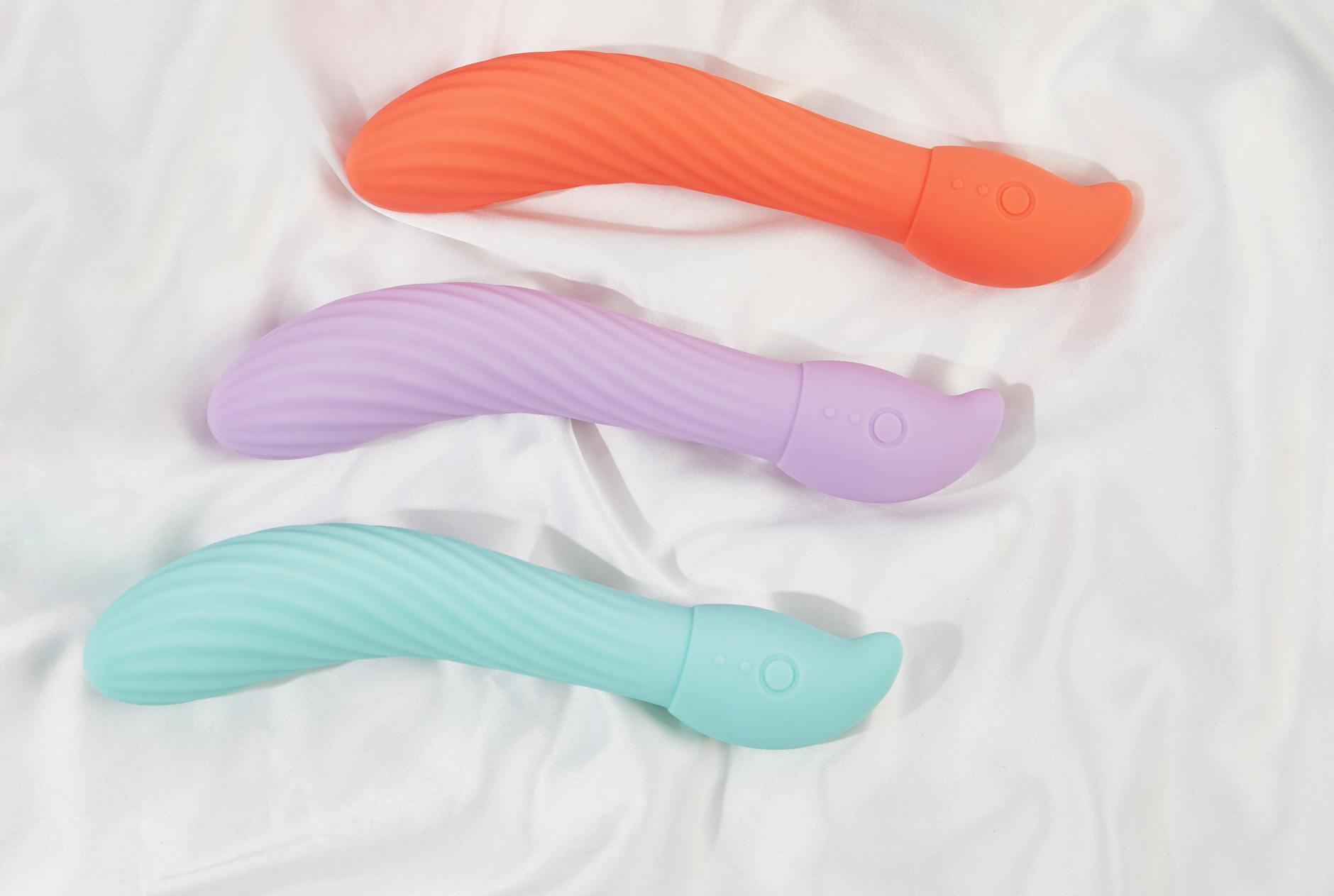
Let's start here
Healing from trauma and pleasure are not enemies. They feel that way sometimes. Your nervous system learned to treat touch as a threat, and now your brain is doing its job by keeping you safe. That protection is not a bug. But it also doesn't mean pleasure is off the table forever.
Pleasure after trauma requires a different approach than pleasure under normal circumstances. It's slower, more intentional, and honestly more connected to your actual body than a lot of people ever get to experience. A lemon clitoral vibrator can be part of that work, but only if you understand the neuroscience of what's happening and how to work with your nervous system instead of against it.
How trauma changes your body's pleasure response
When you've experienced sexual trauma, your nervous system categorizes touch as a signal of danger, not sensation. This isn't a mental problem or a trauma "belief." Your amygdala has literally learned to trigger a threat response when touched in certain ways or in certain contexts. That's why pleasure can feel impossible even when you intellectually want it.
Your body is not broken. It's doing exactly what it was trained to do.
The clitoral complex has dense nerve clusters, which means it's both exquisitely sensitive to pleasure and exquisitely sensitive to threat. After trauma, that same sensitivity becomes hypervigilance. A touch that should feel good triggers a freeze response or dissociation instead.
The good news: neuroplasticity is real. Your nervous system can learn new associations between touch and safety. But that learning has to happen gradually, predictably, and always within your control.
Why a lemon vibrator can be useful for trauma recovery
A lemon sucker or clitoral vibrator offers something that fingertip touch doesn't: consistency and distance. Here's why that matters in healing.
Consistency. A vibrator maintains the same rhythm and pressure every single time. Your brain doesn't have to worry about an unpredictable change in touch. Your nervous system can relax slightly because it's receiving the same input repeatedly. That predictability is deeply soothing to a traumatized nervous system.
Mediated sensation. Silicone and vibration create a buffer between you and direct touch. After trauma, direct skin-to-skin contact can feel invasive even when you want it. A vibrator creates a gentle distance that lets you control the intensity and the texture. You're not being touched by another person or even directly by an object. You're experiencing sensation in a way that feels less vulnerable.
Complete control. You control when it turns on, how long it stays on, what intensity level, when it stops. There's no negotiation, no surprise, no need to manage someone else's experience. That autonomy is foundational to healing because your trauma likely involved a violation of your bodily autonomy. Reclaiming that control is not a side effect of pleasure. It's the whole point.
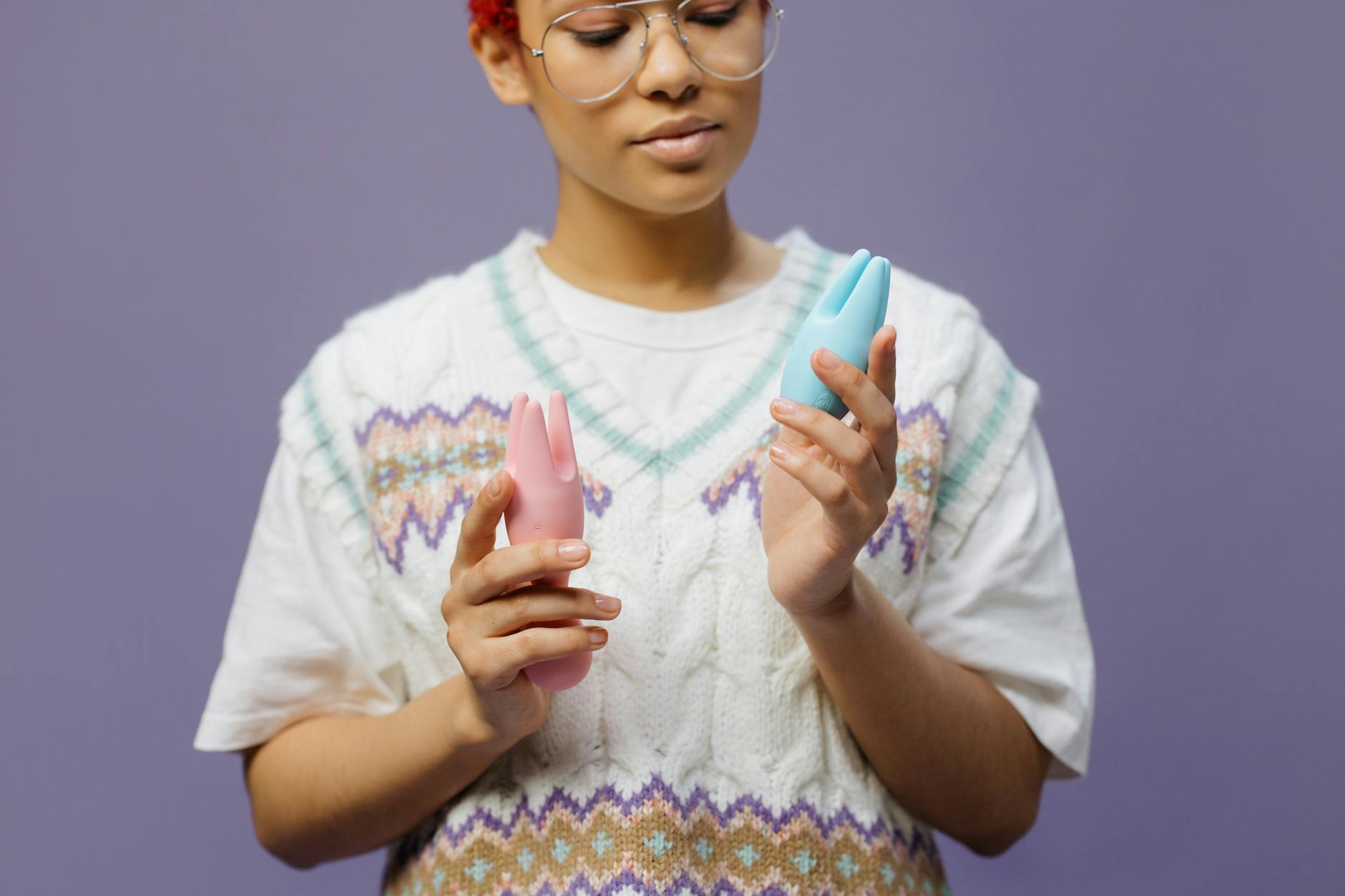
Photo by cottonbro studio on Pexels
A lem vibrator's air-suction design is particularly useful because it doesn't require direct pressure. The sensation is more like a gentle pull than a vibration hammering at your tissue. Many trauma survivors find that gentler input feels safer than the sharp intensity of a traditional vibrator.
The nervous system first approach
Using a lemon clitoral vibrator after trauma isn't about chasing orgasms. That's not the goal. The goal is teaching your nervous system that pleasure and safety can coexist.
Before you ever turn on the vibrator, spend time just holding it. Feel the weight. Notice the texture. Let your brain categorize it as an object, not a threat. If you feel your chest tighten or your breathing change, pause. Your nervous system is telling you something. Honor that.
When you're ready to use it, start clothed. Yes, really. Feel the vibration through fabric first. This gives your brain time to learn that the sensation is not dangerous before you add the vulnerability of being unclothed.
Then move to external, non-genital areas. Thighs, hips, lower belly. Notice what happens in your body. Are you holding your breath? Is your jaw clenched? These are signs your nervous system is in protection mode. When that happens, turn it off. Breathe. Pet yourself or hold yourself. Give your nervous system a moment to recalibrate.
Only when you can experience vibration on your thighs without tension should you consider moving to your vulva, and even then, over underwear first.
Staying grounded while you explore
Dissociation is common after trauma, and it often shows up during pleasure. Your mind splits off from your body as a protection mechanism. But healing requires the opposite: presence and embodiment.
If you notice yourself zoning out or feeling numb while using a lemon vibrator, pause and ground yourself first. The 5-4-3-2-1 grounding technique works: name five things you can see, four things you can touch, three things you can hear, two things you can smell, one thing you can taste. Do that before you resume.
Keep your eyes open while you explore. This small thing is surprisingly powerful for preventing dissociation. Open eyes keep your consciousness tethered to the present moment and your body.
If at any point you feel unsafe, stop immediately. No orgasm is worth overriding your nervous system's wisdom. Your body is not being difficult. It's being protective, and that's actually a sign your healing work is being taken seriously.
When to work with a professional
A lemon vibrator is a tool, not a therapy. If you're healing from sexual trauma, you deserve support from someone trained in trauma work. A therapist who specializes in EMDR, somatic experiencing, or trauma-informed cognitive therapy can help you process what happened while you're simultaneously working to reclaim pleasure.
The combination of professional support and self-directed exploration works faster and feels safer than either one alone. Your therapist helps your brain reorganize the trauma memories. Meanwhile, you're teaching your body that touch can feel good again.
If you find yourself unable to progress past a certain point, or if dissociation is severe, that's not a sign you're broken. It's a sign you need more specialized support. Reach out to a trauma specialist or contact a sexual health clinic that works with survivors.
Building a practice around pleasure
Healing from trauma is not a sprint. You're rewiring your nervous system. That takes time and consistency.
Consider setting aside time once or twice a week specifically for exploration without any pressure to orgasm. The goal is sensation, presence, and learning what feels good in your body right now. That changes week to week, and that's fine.
Keep your lemon clitoral vibrator in a place that feels neutral and safe. Don't hide it like you're ashamed, but don't leave it where it triggers stress either. Treat it like the healing tool it is.
If you're working with a partner, they don't need to be present during this exploration. This time is for you to reclaim your body on your terms. When you're ready, you can invite a partner into intimacy, but that's a different conversation and a different timeline.
Your pleasure matters. Your body matters. The fact that healing takes time and intention doesn't make you broken. It makes you human.
People also ask
Is it normal to feel numb when using a lemon vibrator after trauma?
Yes. Numbness is a common trauma response. Your nervous system learned to shut down sensation as a protection mechanism. This doesn't mean you've broken something. It means your nervous system is still in protection mode. Continue to use the vibrator during grounded, intentional moments, but don't push through numbness trying to force pleasure. Instead, notice it, pause, and let your system recalibrate. Numbness often decreases over time as your nervous system learns that pleasure is safe.
Should I use a lemon clitoral vibrator alone or with a partner while healing?
Alone, at least initially. Solo exploration lets you set the pace, control all variables, and rebuild trust with your body without managing someone else's needs or responses. Once you feel solid in your own pleasure and your nervous system is consistently regulated, you can introduce a partner if you want to. There's no timeline for that. Some people heal entirely within solo practice, and that's perfectly valid.
Can using a lem vibrator trigger trauma memories or flashbacks?
It's possible. Touch, even pleasant touch, can sometimes surface trauma memories. If this happens, it's not a sign you're doing something wrong. It means your body is releasing something it's been holding. Stop immediately, ground yourself, and if possible, talk to a trauma-informed therapist about what came up. Trauma processing can happen during pleasure work, and that's okay as long as you have professional support.
How slowly is too slowly when using a lemon vibrator in trauma recovery?
There's no such thing as too slowly. If it takes you six months to go from holding the vibrator clothed to using it on your vulva, that's not a failure. That's your nervous system doing its work. Healing timelines are not linear, and they're not comparable to anyone else's. Trust your body's pace, even if that pace feels glacially slow to your impatient mind.
What if I use a lemon vibrator and feel worse instead of better?
Stop, and talk to a professional. Sometimes exploration surfaces material that needs therapeutic support, and that's valuable information. Sometimes the tool itself is triggering sensations your nervous system isn't ready to process. Either way, a trauma specialist can help you understand what's happening and adjust your approach. Healing is not a straight line, and sometimes "worse" is part of the reorganization process.
Can my partner help me use a lemon clitoral vibrator as part of trauma recovery?
Not initially. Your healing work needs to happen on your terms, in your timeline, without anyone else's presence influencing how you experience your body. Once you've rebuilt a solid relationship with pleasure on your own, a partner can be present if you choose. But that presence should be passive and supportive, not active or performance-oriented. Check in with a therapist about when and how that progression makes sense for you.
You deserve this
Healing from trauma takes courage, patience, and tremendous self-compassion. Using a lemon vibrator as part of that work is not indulgent. It's practical. Your nervous system needs consistent, predictable, controlled stimulation to learn that pleasure and safety coexist. A lemon clitoral vibrator provides exactly that.
Work at your own pace. Honor what your body tells you. Get professional support. And know that pleasure, full and uncompromised pleasure, is absolutely available to you on the other side of this healing. It just takes time.