The intensity mismatch nobody talks about
You bought a lemon vibrator because you wanted to feel closer. Then you discovered something: your partner loves it at a 7, you peak at a 3. Now the thing sits in the drawer, and neither of you brings it up.
This happens more often than you'd think. It's not a dealbreaker. It's just information you weren't expecting to have.
Why intensity preferences diverge so much
First, the physiological part. Sensitivity to vibration isn't consistent across people, and it's not proportional to how much someone "likes" pleasure. Some people have naturally denser nerve clustering in their genital tissue. Others have thinner, more reactive skin. Nerve damage from years of heavy toy use, or conversely, limited experience with strong stimulation, completely rewires what feels good.
Then there's the psychological layer. Someone who needs higher intensity might actually be seeking grounding, not just sensation. The force pulls their nervous system down from anxiety. Someone who prefers gentleness might be recalibrating from trauma, or simply built to find subtlety more satisfying. Neither is better. They're just different maps.
The trap is treating intensity like a character flaw. It's not. It's data. And data about your partner's body is useful if you know what to do with it.
The lemon vibrator's secret advantage
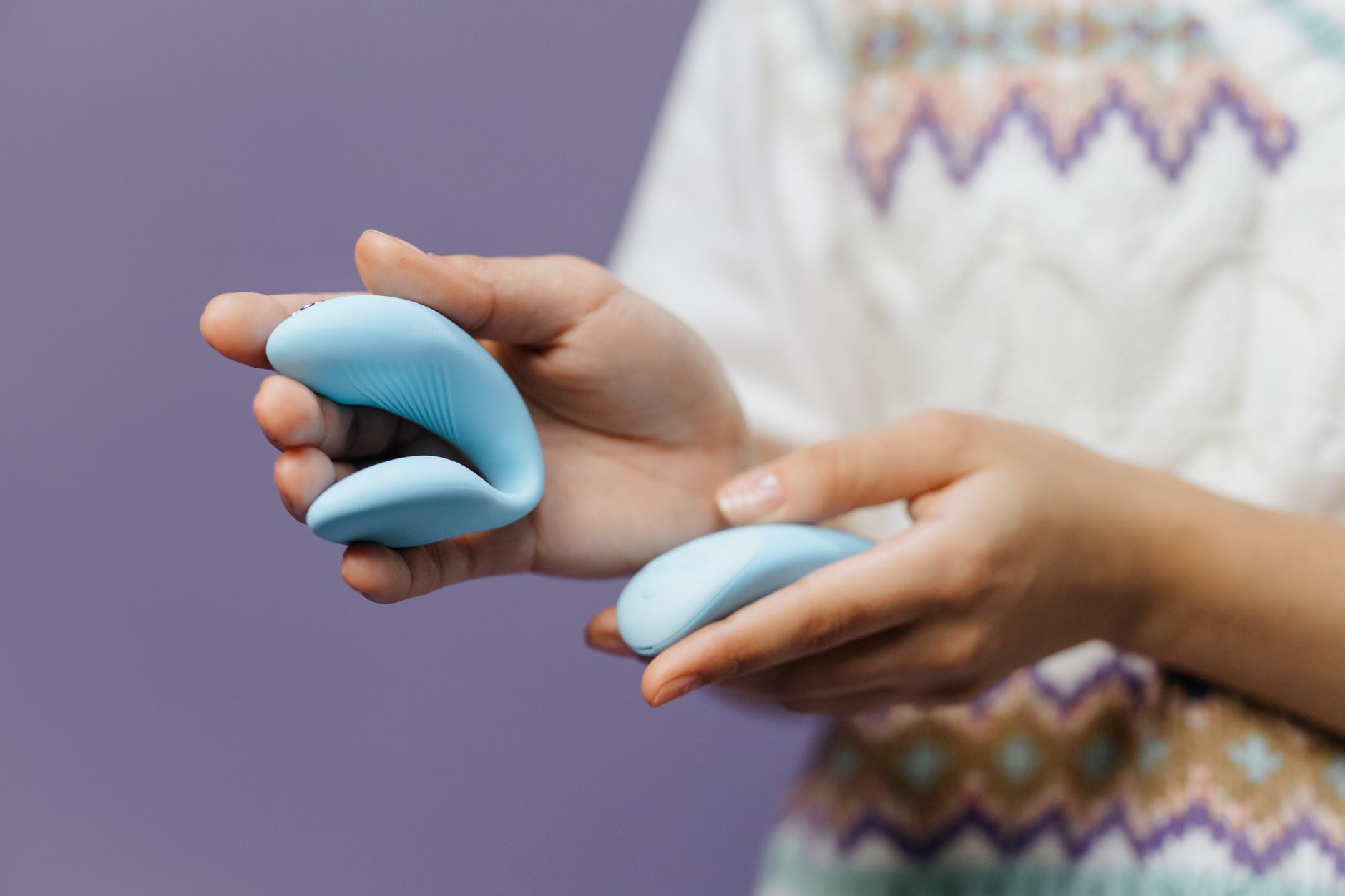
Here's why a lemon clitoral vibrator works better for this problem than most other toys. The design uses air-pulse suction technology instead of pure vibration. That distinction matters because suction operates at a completely different frequency band than vibration.
Translation: you can use the same lemon vibrator simultaneously with different intensity settings, or alternate, and the experience stays pleasurable for both of you. A partner who wants setting 2 gets steady, focused pressure. A partner who craves setting 7 gets that deep, rapid pulse. Same toy. Two completely different physical experiences.
Compare that to a traditional vibrator, where intensity is just "faster." If you're at setting 2, it's too slow for someone who needs 7. If you're at 7, it can feel abrasive or overwhelming for someone whose body prefers restraint.
The conversation before you use it
Don't assume. Ask. Directly.
"I want to try this together, but I realized we might like different settings. What does intensity feel like to you. Is higher always better, or is there a sweet spot where it stops feeling good and starts feeling like... too much."
Listen for the nuance. "High intensity" doesn't mean the same thing to everyone. For some people, it's about power. For others, it's about precision. Your partner might say "I like it strong but not buzzy" or "I need the sensation to build slowly." Those are the details that actually matter.
Then share your own. "I prefer gentler because intense feels sharp to me" or "I get numb if it's too light." Name it plainly. You're not confessing something shameful. You're describing your body's hardware.
Three practical approaches that actually work
Approach 1: Take turns with the same settings.
Set the lemon vibrator to a mid-range setting (usually 4 or 5) and explore it together for a few sessions. One partner uses it solo while the other watches and learns what makes them respond. Then switch. The benefit here is you're not negotiating settings mid-session. You're gathering data about each other's pleasure without the performance pressure of simultaneous use.
After 2-3 rounds, you'll notice patterns. Maybe one of you actually likes the mid-range better than you expected. Maybe you both prefer different ranges but are closer than you thought. Either way, you've removed the guesswork.
Approach 2: Use it sequentially, not simultaneously.
Start with the partner who prefers lower intensity. They get 10-15 minutes at their preferred setting while the other partner is present and engaged. Touch them, kiss them, build connection. Then swap. The partner who wants higher intensity gets their turn, at their setting.
This removes the pressure of "making it work for both of us at the same moment." Pleasure is still shared and intimate. It's just not synchronized. That's actually fine. Some couples find they connect more deeply this way because neither person is managing someone else's experience.
The bonus: you learn a lot about your partner's pleasure by watching them at their favorite setting. You see what makes them move, where they want pressure, how their breathing changes. That's valuable intel for touch without toys too.
Approach 3: Have your own lemon vibrators.
I know that sounds like the cheat answer, but it's genuinely underrated. If intensity preferences are significantly different, and you're planning to use a lemon clitoral vibrator regularly as a couple, two toys means zero negotiation. Each of you uses yours at the setting that feels right, simultaneously.
Yes, it costs more upfront. But couples who own two devices report less resentment, more pleasure, and more frequent use overall. The psychology matters. When you're not managing someone else's comfort, you relax into your own.
When intensity preference is actually revealing something else
Sometimes the intensity gap is really a desire gap. One partner wants higher intensity because they're disconnected from the experience. The other prefers gentleness because they're anxious or dissociated.
The lemon vibrator won't fix that. Talk will.
If your partner consistently wants settings you find overwhelming, ask if something else is happening. "Are you bored at lower settings. Are you looking for something the toy can't give you. Do you feel disconnected unless it's intense."
Likewise, if your partner always wants the gentlest option, check in. "Do you prefer this, or does stronger feel uncomfortable. Are you worried about something."
These conversations are uncomfortable. They're also the ones that actually move things forward. A lemon vibrator is a tool for pleasure. It's not a fix for intimacy problems.
The rhythm that keeps you both satisfied
Here's what sustainable couples practice looks like. You use the lemon vibrator together maybe once or twice a week. One session, you honor the lower-intensity preference. The next, the higher-intensity one. Or you trade off weekly, so neither person feels perpetually compromised.
You also keep talking. Bodies change. Preferences shift. What felt perfect in month one might need adjustment in month three. That's normal. The couples who stay connected through toy use are the ones who treat it as an ongoing conversation, not a one-time negotiation.
And here's the thing people don't always say out loud: when you truly listen to your partner's pleasure, you feel something. Responsibility, sure. But also attraction. There's something deeply connecting about knowing exactly what makes someone's body sing, and then deliberately giving them that.
Intensity preference isn't a compromise you're making with your partner. It's a detail you're learning about the person you love.
When to recalibrate or try something new
If you've been trying these approaches for a few weeks and it's still not landing, consider a few things. Are you choosing times when you're both actually relaxed. Stress makes people crave different intensities. Are you both getting enough pressure-free touch outside of toy use. Sometimes intensity friction shows up when couples aren't connected otherwise.
You might also need to expand your toolkit slightly. If the gap is huge, a mid-range lemon vibrator plus a gentler toy (like a whisper-setting option) could let you both get what you need. Or explore whether the intensity issue is actually about patterns rather than settings. Some partners feel closer if they use the toy during a longer foreplay window. Others feel disconnected if toys come in too early.
These are small moves, not overhauls. But they matter.
FAQ
Can two people use the same lemon clitoral vibrator at different settings during couple play?
Not at the exact same moment. The lemon vibrator has one setting at a time. But you can alternate quickly between settings, or use the toy sequentially (one partner at setting 3, then the other at setting 6). The air-pulse design makes this less jarring than it sounds, since the suction sensation feels different from pure vibration at different speeds.
What if my partner's preferred intensity actually hurts my sensitivity?
That's a sign you might need a different tool for that person, or an entirely different approach. Some bodies genuinely can't tolerate high-frequency vibration. If that's the case, try the sequential method (turn-taking) rather than simultaneous use. Or explore whether your partner would prefer a different type of stimulation altogether. Not every toy works for every couple.
Does preferring high intensity mean my partner isn't satisfied without it?
No. Preference for intensity is physiological, not emotional. Someone who loves high settings on a lemon vibrator might feel completely satisfied with gentle touch from a partner. Intensity need and pleasure capacity are different things. The intensity preference just tells you what that particular toy does best for that particular body.
How often should couples use a lemon vibrator together?
There's no schedule. Some couples use it weekly. Others monthly. The rule is: use it when you both want to, and let it fade into the background when you don't. If you're using it out of obligation, it's not working. If you're both genuinely into it, frequency follows naturally.
Should we hide the intensity difference from each other?
Absolutely not. The couples who struggle most with toy use are the ones who feel shame about preferring different things. Once you name it out loud, it becomes manageable data rather than a secret source of distance. Naming it doesn't ruin anything. It actually frees you.
What if only one of us wants to use a lemon vibrator?
Then that person uses it solo, and you stay present. You can be in the room, touching them, watching, building connection without direct genital involvement. Or they use it alone sometimes and during couple play other times. The toy doesn't have to be a "we" thing to stay connected. What matters is that both of you feel okay with how it's being used.
Intensity preference in couples isn't a problem to solve. It's a conversation to have. Once you get comfortable naming what feels good for each of you, a lemon clitoral vibrator becomes one of the clearest communication tools you have. You're literally showing each other what your bodies need. That kind of knowledge is the foundation of lasting pleasure and connection.
If you're navigating other relationship shifts alongside introducing toys, our guide on how to use a lemon vibrator with partners who have different sexual needs covers the broader intimacy piece. And if you're trying to rebuild connection after life stress, that's its own conversation worth having.