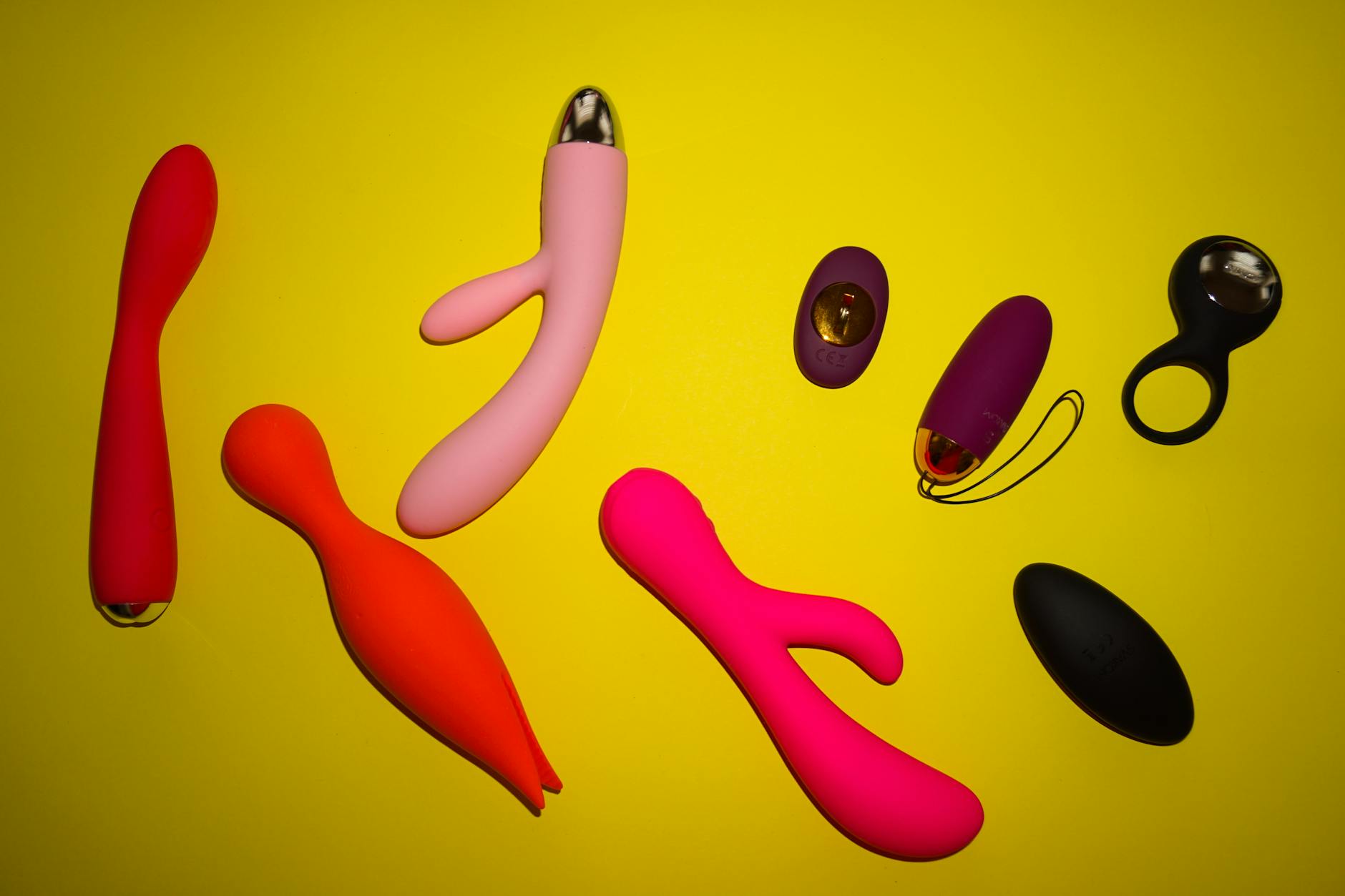
Let's be honest about what having kids does to sex
Parenthood doesn't kill desire. It kills time, energy, and the mental space where desire lives. You're running on three hours of broken sleep, someone's crying in the other room, and the thought of taking off your clothes feels less like arousal and more like one more thing to organize. By the time both partners could theoretically be available, you're already asleep sitting up on the couch.
This is not a phase. This is the reality for roughly 60% of couples with young kids. And here's what most couples don't talk about: a lemon vibrator doesn't fix exhaustion, but it changes how you approach the problem entirely.
Why traditional foreplay doesn't work when you're depleted
Conventional sex requires something parents don't have: bandwidth. The slow build, the mutual focus, the patience for arousal to happen naturally. When you're running on fumes, that feels impossible. Either someone initiates and the other partner feels guilty for not being able to reciprocate fully, or nobody initiates at all and you drift into a kind of touch-free companionship that feels terrifying after a few months.
A clitoral vibrator like the Lem changes the equation because it compresses the timeline. Arousal that might take 20 minutes of foreplay can happen in five to seven minutes with the right device. That's not a shortcut. That's efficiency. And when you're both exhausted, efficiency is honesty.
The permission slip angle
Here's something I see constantly in couples therapy: parents with young kids are afraid to ask for what they need because asking feels selfish. You're both already stretched thin. The idea of saying "I want us to have sex, and I want it to be quick and focused on me" feels like asking for the moon when you're both drowning.
A vibrator gives you both permission to name this out loud. Instead of "Can we try something tonight?", you can say "I want us to use the Lem together. It takes ten minutes, and I think we both need this." The specificity matters. It removes the emotional weight.
Starting the conversation without making it weird
If you haven't talked about introducing a vibrator yet, here's what works: don't build it up. Bring it up the same way you'd mention picking up milk. "I was thinking we could try using a clitoral vibrator together. There's this device called the Lem that couples seem to like. Want to look at it together?"
Keep the tone light and practical. Not mysterious, not loaded with expectation. You're solving a logistics problem, not choreographing something out of a fantasy.
If your partner seems hesitant, don't push. Instead, name the actual fear. "Are you worried it means you're not enough?" Nine times out of ten, that's it. The conversation becomes about reassurance, not the device. A lemon vibrator is a tool for connection, not a replacement for it.
How to actually use it as a couple when time is limited
Forget the elaborate scenario. Here's what works for parents with young kids:
Set a firm boundary. Pick a time window. "Sunday after the kids go down, we have thirty minutes." This removes the anxiety of "will the kids interrupt?" because you've already decided they won't.
Start clothed. You don't need to get fully undressed if that feels like too much friction. You can absolutely use a vibrator through underwear or with pants off. Start however feels manageable.
One partner leads, one partner supports. If you're the one using the Lem, your partner's job isn't to perform. It's to be present. They can touch your back, kiss your neck, hold your hand. The device handles the technical work. They handle the emotional connection.
Lower the orgasm bar. Not every session needs to end in orgasm. Sometimes the point is just remembering that you like being touched. Sometimes the point is fifteen minutes where you're both thinking about each other instead of laundry. Count that as a win.
Why the clitoral vibrator works better for exhausted couples
A lemon clitoral vibrator uses suction stimulation, which means it doesn't require the same level of engagement from your partner that other activities do. They're not timing thrusts or managing rhythm. They're just there, present, while the device does what it does.
For partners who feel guilty about "not being enough," this is actually liberating. You can hold each other and use the Lem together without the pressure that comes with traditional penetrative sex. Both of you get to feel connected without anyone tracking who's giving and who's receiving.
The nervous system piece nobody mentions
When you're depleted, your nervous system is jangled. You're in low-grade fight-or-flight all day with the kids. Getting aroused requires shifting into a parasympathetic state. That's hard to do when you're both hypervigilant.
A vibrator helps because physical stimulation can shift your nervous system faster than willpower alone. Ten minutes with a lemon vibrator can do more for your parasympathetic state than an hour of trying to "get in the mood" through conversation.
Managing the logistics (the unsexy part that matters)
Keep the device accessible. Don't hide it in a box in the closet where you have to plan a heist to get it. If it lives in your nightstand drawer, you're 10 times more likely to use it.
Charge it regularly. Nothing kills momentum faster than discovering it's dead when you need it. Make charging part of your Sunday night routine, like setting out clothes for the week.
Have a simple cleaning routine. Warm water and mild soap after each use. Keep it simple enough that nobody's stressed about hygiene becoming another chore.
When one partner wants this and the other doesn't
This is where couples therapy language matters. You're not trying to convince your partner. You're trying to understand what they're protecting. "When I bring this up, what am I asking you to do that feels hard?"
Often it's not about the vibrator. It's about acknowledging that sex has changed. That it's not spontaneous anymore. That you can't be the partners you were before kids. Some people grieve that version of the relationship, and the vibrator feels like a symbol of that loss.
That's real. But it's a different conversation than "Should we try a clitoral vibrator?" Have the grief conversation first.
The long game
Using a lemon vibrator as a couple when you're exhausted isn't about passion. It's about continuity. It's about looking at each other six months in and saying "We didn't lose this. We just adapted it." Some of the most solid long-term couples I work with are the ones who figured out how to have touch and intimacy that works for their actual life, not the fantasy version.
FAQ
How often should we use a vibrator if we're both exhausted?
There's no magic number. Once a week is realistic for many parents with young kids. Once every two weeks is also fine. The point is consistency, not frequency. A device you use twice a month for ten minutes is more valuable than one you think about using but never actually bring out.
Will using a vibrator make my partner feel insecure about their ability to please me?
Possibly, at first. That's why the conversation matters more than the device. Frame it clearly: "I want to use this because I want us to be intimate, and this makes that possible right now. It's not about you. It's about our reality." If insecurity persists, that's worth exploring in conversation or couples counseling.
Can we use a clitoral vibrator together even if we're not in the mood?
Absolutely. In fact, that's when it's most useful. A lot of parents use it as a way to create mood rather than require it. "I'm not feeling it, but I'm willing to try for ten minutes." The physical stimulation often does the psychological heavy lifting for you.
What if we don't have enough privacy even for ten minutes?
This is real, especially with very young kids or living situations that are tight. A white noise machine, a lock on the door, or even a phone with a timer for quiet time can work. If privacy is genuinely impossible, that's worth naming as a couple problem separate from the vibrator question.
Is it weird to use the same lemon vibrator if we're both using it?
No. The Lem and other clitoral vibrators are designed for solo or partnered use. Clean it before and after, obviously, but there's nothing weird about both partners using the same device. In fact, some couples find that switching roles (one partner using it solo while the other watches, then switching) is another way to stay connected.
How do I know if we need a vibrator or if we need couples therapy?
You probably need both, honestly. A vibrator solves "we're too exhausted to have the kind of sex we used to." Therapy solves "we're disconnected and don't know how to talk about it." They're different problems. A vibrator won't fix resentment, but it can help you stay physically connected while you work through the bigger stuff.