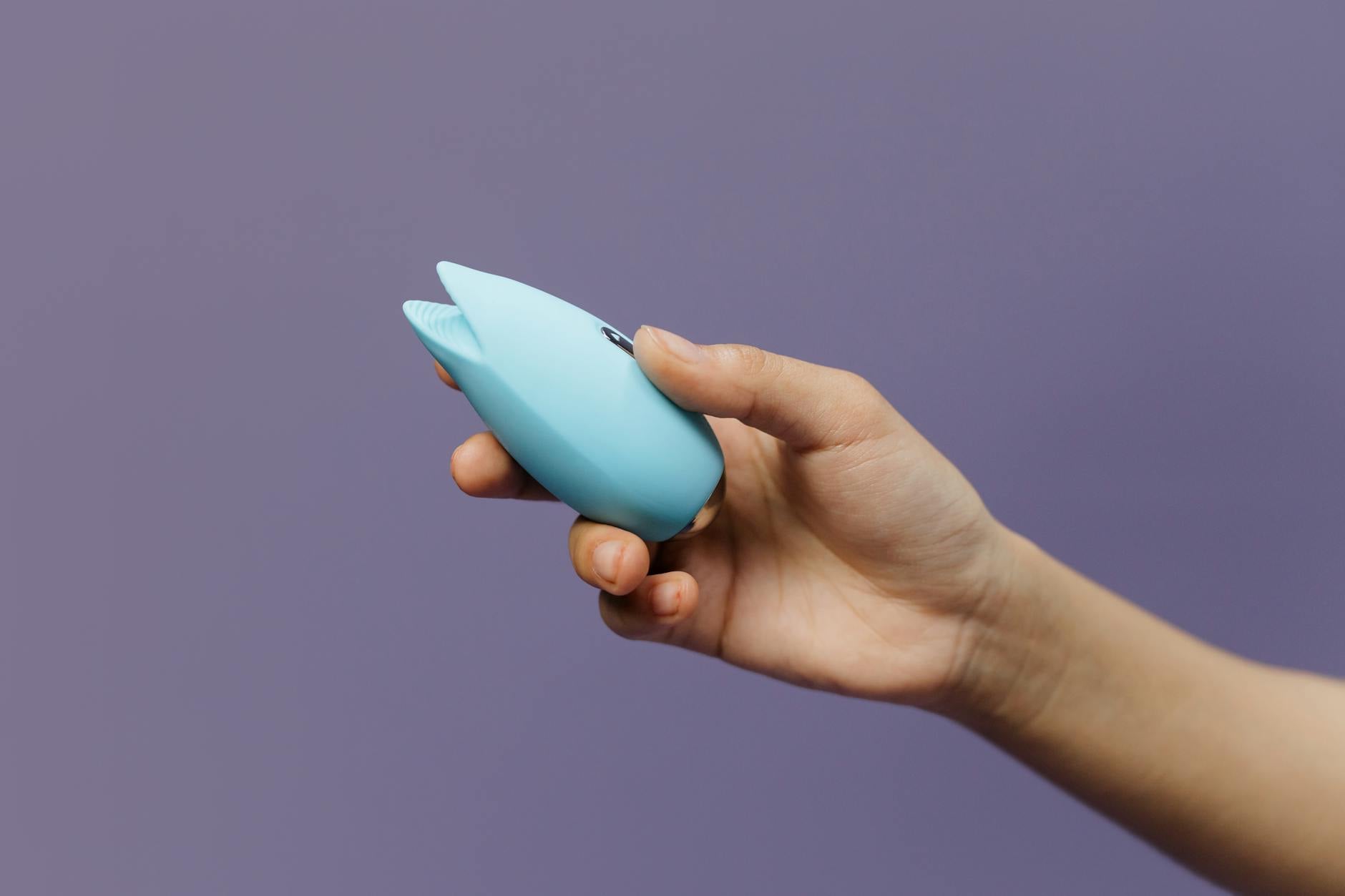
Here's what nobody warns you about with HRT
Hormone replacement therapy is life-changing. It's also disorienting when your pleasure suddenly feels foreign. You're using the same lemon vibrator you've used for months, but something is off. The sensation that used to reliably work now feels weird. Maybe it's too intense. Maybe it's too subtle. Maybe you're reaching orgasm faster, or slower, or differently than before.
This is real. And it's not your imagination.
HRT shifts tissue thickness, blood flow, lubrication production, and neural sensitivity. That means your clitoral vibrator experience changes. The good news: you don't need a new toy. You need to recalibrate.
How HRT rewires pleasure at the tissue level
When you start HRT, estrogen and progesterone (or testosterone, depending on your regimen) enter your system in new ratios. This changes your body's response baseline.
Estrogen thickens vaginal and clitoral tissue. More tissue mass means different transmission of vibration. A setting that felt perfect before might now feel either muted or aggressively sharp, depending on how your individual tissue responds. Progesterone tends to slow arousal time and can make orgasm feel more concentrated or delayed. Testosterone increases arousal speed and can make sensation sharper.
What's wild: these changes aren't stable for the first 3 to 6 months of HRT. Your body is recalibrating constantly. That means your lemon vibrator settings might need tweaking every few weeks as your hormones settle.
The first thing to check: lubrication
HRT usually increases natural lubrication if estrogen is part of your regimen. This should theoretically make clitoral vibrator use more comfortable. But here's the catch. Some people report that the type of lubrication changes. It might feel slicker or stickier. It might dry faster or persist longer.
If you've been using lube with your lemon clitoral vibrator before, you might not need as much now. Or you might need more, depending on whether your particular HRT formulation boosts lubrication production.
The solution: pay attention. Use your normal amount for one session. If it feels too wet or too dry, adjust down or up by half a teaspoon next time. Water-based lube works best with silicone toys like the Lem vibrator anyway, so stick with that.
Recalibrating vibrator intensity after HRT
This is the most common adjustment I see clients make. You go from pattern 3 on your lemon sucker to suddenly needing pattern 1 or 2. Or the opposite happens and you need to jump to 4 or 5.
Here's the protocol I recommend.
Start at the lowest setting you've ever used. Yes, even if that setting felt boring before HRT. Spend 5 minutes exploring. Notice: Is it still boring? Uncomfortably intense? Just right? Then move up one setting and repeat. Don't rush. Don't judge. You're mapping your new baseline.
Most people find their new sweet spot within two to three sessions. Write it down. Literally write down the setting that works. Your brain will forget, especially in the first months when you're adjusting to everything else HRT brings.
One more thing: intensity might shift throughout your cycle, even on HRT. Progesterone fluctuations can change sensitivity week to week. So check in monthly, not just once.
Arousal timing shifts (the thing nobody expects)
Many people on HRT report that the time it takes to reach arousal and orgasm changes dramatically. Some speed up. Some slow down. Both are normal.
If you're used to a quick warm-up and suddenly need 20 minutes with your lemon vibrator, don't panic. Your body isn't broken. HRT can affect the arousal curve. Testosterone tends to shorten it. Progesterone tends to lengthen it.
The fix: budget more time. Seriously. If you used to set aside 10 minutes for solo pleasure, try 20 or 25 now. This isn't a sign something's wrong. It's just your body operating at a different pace. Some people find this actually makes pleasure deeper because they're not rushing.
If arousal is taking much longer than feels reasonable (like an hour with your lemon clitoral vibrator and nothing), that's worth mentioning to the clinician managing your HRT. Dose adjustment sometimes helps.
Orgasm quality and the lemon vibrator recalibration
Here's what I hear most: "My orgasms feel different. Smaller. Bigger. More localized. Spread out."
Yes to all of that. HRT changes not just whether you orgasm, but how orgasm feels. More estrogen can make orgasms feel broader and more diffuse. More testosterone can make them feel concentrated and sharp. Progesterone can make them feel deeper or more delayed.
If your orgasms feel weaker, you might need:
Longer warm-up time. More direct clitoral contact (which a lemon sucker like the Lem provides brilliantly). A different vibration pattern. Sometimes switching from a steady pulse to a ramp pattern changes everything.
If your orgasms feel overwhelming or too intense, you might need:
Short bursts instead of continuous use. Lower settings. Indirect stimulation (holding the lemon vibrator slightly off the clitoris instead of directly on it). A longer break between sessions to let sensitivity reset.
The key: your lemon clitoral vibrator isn't the problem. Your body is just speaking a new language, and you're learning to listen.
When to seek help from your HRT provider
Some changes are normal. Some aren't.
Normal: needing to adjust intensity, arousal timing shifting, orgasm feeling different, lubrication changing.
Not normal and worth reporting: pain during vibrator use, numbness or loss of sensation in the clitoris, complete loss of orgasm capacity after weeks on HRT, or severe dryness even with lubrication and higher estrogen doses.
If any of these happen, loop in your HRT provider or a gynecologist. Sometimes a dose adjustment or formulation change makes a huge difference. Topical estrogen can help if tissue isn't thickening enough. And sometimes it's just a matter of giving your body more time to adjust.
The waiting game: how long until things stabilize
Most clients tell me that by month 4 or 5, things feel more predictable. Your body settles into its new baseline. That doesn't mean sensation stops shifting. It means the shifts become smaller and more manageable.
Until then: be patient with yourself. You're not less sexual. Your body isn't broken. You're adjusting to a new hormonal environment, and that takes time.
Use your lemon vibrator as a tool for exploration during this period, not just for climax. Try different settings. Try different durations. Try different angles. Some of my most adventurous clients use HRT adjustment as an accidental period of rediscovery.
What to track (actually useful monitoring)
You don't need to journal obsessively, but tracking a few things helps.
Each session or weekly: Which vibrator setting felt best? Did it take longer or shorter to warm up? How did the orgasm feel (intensity, location, quality)? Any discomfort or texture issues?
Each month: Is there a pattern emerging? Are settings stabilizing or still shifting?
This isn't medical documentation. It's just enough data to notice patterns. Screenshot it, write it in your notes app, jot it down. When you talk to your HRT provider about sexual side effects, this information is gold.
The partnership angle (if you have one)
If you're partnered, a heads-up helps. "My body is adjusting to HRT and pleasure feels different" is not a referendum on your partner or the relationship. It's biology. But if your partner doesn't know it's coming, they might interpret slower arousal or different orgasm responses as loss of interest.
Five minutes of honest conversation beats weeks of confusion. You're not asking permission. You're sharing information. "I might need longer warm-up time" or "I'm experimenting with different settings on my lemon vibrator to find what feels good now" sets everyone up for less friction.
FAQ: HRT and lemon clitoral vibrators
How long after starting HRT do changes to pleasure show up?
Some people notice within days. Most notice within 1 to 3 weeks. By month 2 or 3, changes are usually obvious. The first 6 months is the most volatile period for sensation changes. After that, shifts tend to be smaller.
Can I use the same lemon vibrator settings throughout HRT or do I need to keep adjusting?
You'll probably need to adjust. Not dramatically, but noticeably. Most people find a new baseline within 3 to 6 months and then stay there. But if your HRT dose changes, you're likely to need another recalibration period.
Is it normal for my lemon sucker to feel less pleasurable after starting HRT?
Yes. It's also normal for it to feel more pleasurable. Both happen. Tissue changes mean sensation changes. Neither is permanent. As your body adjusts, pleasure usually returns, often at a new intensity level.
What if I'm on microdosing HRT or a lower dose and I don't notice much change?
Lower-dose HRT means smaller tissue changes, which can mean smaller pleasure changes. You might notice very subtle shifts instead of obvious ones. That's fine. The protocol is the same: pay attention and adjust incrementally.
Should I take a break from my lemon clitoral vibrator while starting HRT?
No. Using your vibrator helps you stay connected to what's changing. You'll notice shifts faster if you're paying attention regularly. Plus, pleasure is part of your health during HRT adjustment. There's no reason to pause that.
What if my partner and I used a lemon vibrator together before HRT and now it feels weird?
Common. Bring it up directly. "My body's changing with HRT and what felt good before feels different now. Want to explore together and find the new normal?" It's an opportunity to reconnect, not a crisis.
Bottom line: your lemon vibrator isn't the issue
You are recalibrating. Your body is doing exactly what it's supposed to do on HRT. Sensation changes. Arousal timing shifts. Orgasm feels different. That's not failure. That's adaptation.
Your lemon clitoral vibrator is a tool built for exploration. Use it to learn your new body, not to force your body back into old patterns. Settings will shift. That's the work. And after a few months, you'll have a new normal. Often a really good one.
If something feels genuinely off or painful or persistently numbed, reach out to your HRT provider or a gynecologist. But most of this? This is just the landscape of change. And you've got everything you need to navigate it.
Want to talk through your specific experience or have questions about what's normal for your HRT regimen? Get in touch. That's what we're here for.