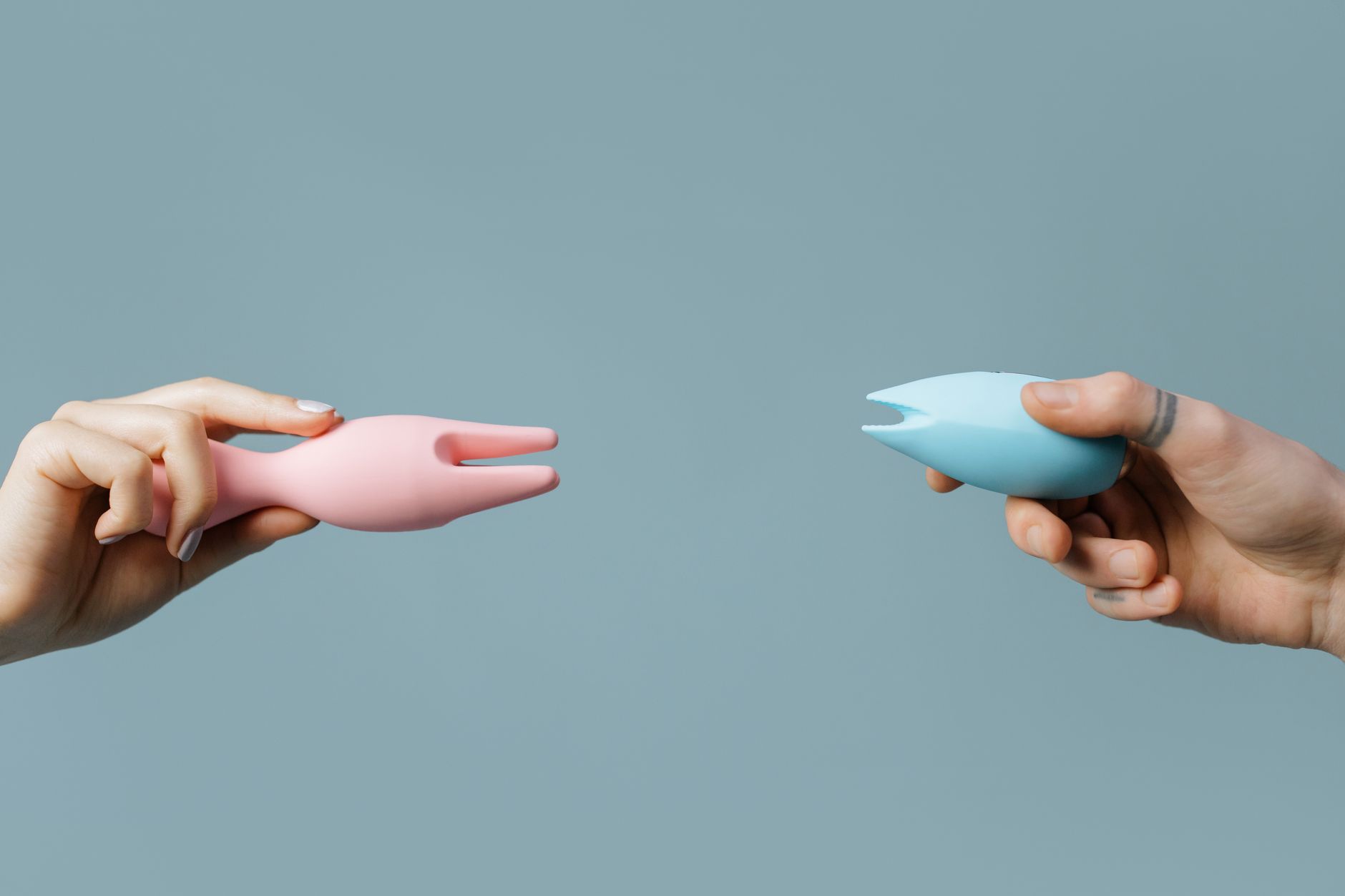
The honest truth about manual stimulation
Your hand isn't lazy and you're not broken. Manual stimulation works. The issue is efficiency and what happens when efficiency meets pleasure. After a certain point, your hand gets tired, the angle goes weird, and the whole experience starts feeling like work instead of play. That's not a failure. That's biology.
Here's what vibration actually does differently. A quality lemon vibrator or clitoral vibrator creates sustained, precise stimulation at a frequency your hand literally cannot match. We're talking 5,000 to 10,000 micro-movements per minute. Your hand maxes out around 200. The difference isn't subtle. Your nervous system registers it as a completely different signal.
Why vibration feels different (even if you've tried toys before)
If you've experimented with traditional vibrators and they didn't work, that doesn't mean vibration doesn't work for you. It usually means you tried the wrong type or the wrong intensity pattern.
Most standard vibrators deliver broad-surface vibration. They work fine for some bodies. For others, especially people with sensitive clitorises, broad vibration feels overwhelming or numb-making. You need pattern variation and control. A lemon vibrator or lem vibrator works differently. Suction-based clitoral vibrators use rhythmic pulses and pressure rather than constant buzzing. The sensation builds gradually. It doesn't hit all at once.
Second, if you're used to manual touch, your clitoris has learned to respond to direct friction at a certain tempo and pressure. Switching to vibration can feel initially jarring because the stimulus is so different. Your body needs about 3-5 sessions to recalibrate. Most people quit before that happens.
Photo by Anna Shvets on Pexels
The transition protocol that actually works
Forget forcing yourself to like vibration. Instead, layer it gradually onto what already works.
Start by using your hand for the first 10-15 minutes of solo play. Get aroused, get close to where you'd normally want vibration, then introduce the toy. Start at the lowest intensity setting. Don't aim for orgasm on session one. Aim for curiosity. You're teaching your body that vibration is information, not an invasion.
On session two, start the vibrator slightly earlier in your arousal cycle. By session four or five, you'll notice something shifts. The vibration stops feeling foreign and starts feeling like an amplification of sensation you already knew.
For people who struggle with intensity, a lemon sucker style toy works exceptionally well during this transition because you control the sensation through the button patterns rather than direct vibration. It's gentler entry point into mechanical stimulation.
Picking a clitoral vibrator when you're coming from manual play
Not all vibrators are built for people moving from hands to toys. Here's what matters:
Pattern variation over raw power. You don't need the strongest vibrator. You need one with at least 5-8 different patterns so you can find the frequency your body responds to. The variation also prevents desensitization. Your nervous system adapts to constant stimulation. Pattern switching keeps things responsive.
Noise level, genuinely. Manual play is silent. If you introduce a toy that sounds like a small drill, it breaks your mental immersion immediately. Quieter toys let you stay focused on sensation instead of worrying about sound.
Texture and size. Coming from hands, you're used to direct contact over a small area. A bulky wand vibrator can feel imprecise by comparison. A smaller, targeted clitoral vibrator maps more naturally onto what manual touch felt like. A lemon vibrator's compact design bridges that gap nicely.
Waterproof construction. This matters less for sensation, more for anxiety. If you're nervous about accidentally getting water inside it, you'll be tense. Waterproof toys let you relax completely.
The role of fantasy and headspace
Here's something almost no one talks about: vibration works better when you're already mentally aroused. Manual stimulation can sometimes carry you forward on mechanics alone. Vibration requires more active engagement from your brain because the sensation is so different.
That means you need to come to the toy already thinking about something that turns you on. Not thinking about the toy itself, not wondering if you're doing it right. Actually activated mentally. The vibration then amplifies that mental state into physical response.
If you show up to a new lemon vibrator feeling neutral or skeptical, it will feel weird and disconnected. If you show up already aroused, it feels like a natural next step.
When vibration isn't the answer (and what to try instead)
Some people try vibration and discover it's genuinely not their thing. That's fine and valid. But before you decide, rule out the obvious problems.
If vibration makes you feel numb, you're probably starting too intensely or using it on already-fatigued tissue. Back off. Warm up longer with hands first. Use the lowest setting.
If vibration feels too intense even at the lowest setting, you might need suction-based stimulation instead. A lemon sucker toy creates pressure and rhythm without raw vibration. The sensation is contained and gradual.
If you've tried multiple toys and nothing clicks, the issue might not be the vibration. It might be that you need a partner present, or more time, or different mental framing. Sometimes the barrier is physical. Sometimes it's psychological. A clitoral vibrator is a tool. It can't create arousal from nothing.
Building confidence with a new toy
First time with a lem vibrator or any new clitoral vibrator can feel awkward. You're unfamiliar with the buttons, the patterns, the sensation. That's normal. Give yourself permission to suck at it initially.
Try it solo first, no pressure, no expectation of orgasm. Just mapping. Where does it feel best? Which pattern makes your breath change? What angle works? You're gathering data, not auditioning for an orgasm.
Second solo session, you can start with intention. You've already explored, now you know what to reach for.
If you eventually want to use it with a partner, that's a separate conversation. Let your partner know roughly what patterns feel good so they're not constantly guessing. Or let them experiment while you give feedback. The toy doesn't replace their touch. It adds a option.
Why this transition sticks
Once you've bridged from manual to mechanical stimulation, most people don't go backward. Not because vibration is "better" in some absolute sense. Because it's more efficient and it opens up pleasure possibilities that manual play alone can't reach.
Your hand can still be part of the experience. Use it to warm up, to touch your body elsewhere, to guide the toy. Vibration isn't a replacement for hands. It's a partner to them.
The real shift happens when you stop thinking of it as "using a toy" and start thinking of it as "using the right tool for what I want right now." Sometimes that's hands. Sometimes that's a lemon clitoral vibrator. Sometimes it's both. The flexibility is where the actual pleasure lives.
People also ask
How long does it take to adjust to a clitoral vibrator if I've only used my hand?
Most people report adjustment around session 3-5, so roughly two weeks if you're playing solo a couple times weekly. Some people feel the difference immediately. Others need more time. There's no "right" timeline. Your nervous system sets the pace. Go slow.
Can I damage my sensitivity by using a vibrator too much?
Desensitization is real but preventable. Don't use the same pattern for weeks on end. Rotate between different toys or stimulation methods. Give yourself manual-only weeks occasionally. Your body adapts to constant input, but it also recalibrates when you change things up. Variety is the actual protection.
Is a lemon sucker the same as a regular vibrator?
No. A lemon sucker uses suction and rhythmic pulses. A traditional vibrator uses constant or patterned vibration. The sensation is genuinely different. Suction feels like gentle sucking. Vibration feels like buzzing stimulation. For people sensitive to vibration or new to toys, suction-based lemon vibrators often feel more intuitive and less overwhelming than buzz-only toys.
What if I've never had an orgasm and I want to try a vibrator?
A clitoral vibrator can help you learn what your body is capable of, but it's not a magic fix for difficulty orgasming. Work with a professional (therapist or sex educator) to understand if barriers are physical, psychological, or both. Then add the tool. The tool works better when you've already done the groundwork.
Do I need an expensive lemon vibrator or can I start with something cheap?
Start with something mid-range and well-reviewed rather than bottom-shelf or luxury. A $50-70 toy with good patterns and customer feedback will teach you what you like. Once you know what actually works for your body, investing in a higher-end clitoral vibrator makes sense. You're not wasting money on features you'll never use.
Can I use a clitoral vibrator with a partner or is it just for solo play?
Both. Plenty of people use lemon vibrators during partner sex. You control it or they do. It adds sensation without replacing anything. The key is talking about it first. "I want to try using this during sex" is a different conversation than silently introducing it mid-encounter. Communication first, then experiment.
Next steps
If manual stimulation has stopped delivering the intensity or speed you're after, vibration is worth exploring. Pick a toy with good reviews, set realistic expectations for the adjustment period, and prioritize curiosity over pressure. You're not broken. You're just ready for something different.
Have questions about which type of clitoral vibrator might suit your body, or want guidance on the transition itself? Reach out. We're here to help you figure out what actually works for you, not what you think should work.